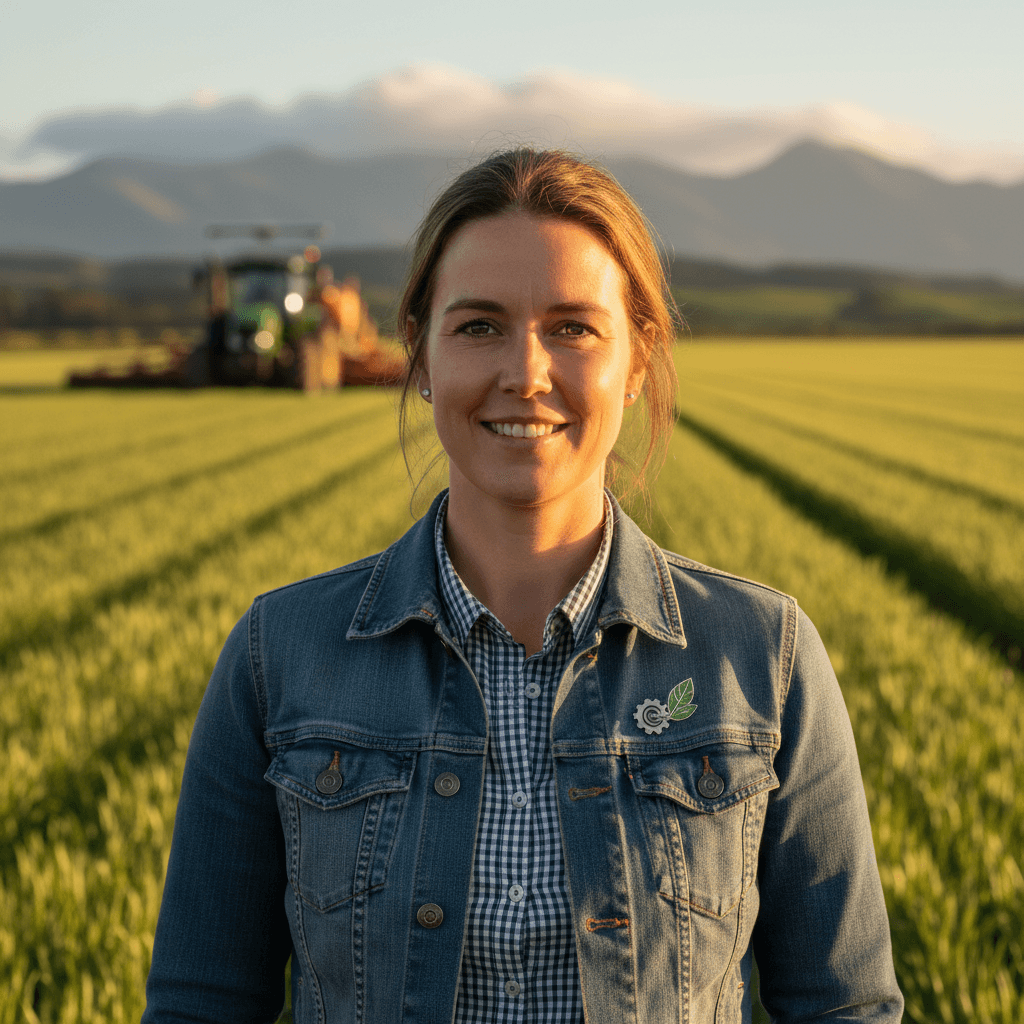
Anke(37)
Wageningen → Canterbury
I studied plant sciences in Wageningen and specialized in precision agriculture — using data, sensors and AI to make farming more efficient and sustainable. After eight years at an agritech company in the Netherlands developing systems for Dutch and European farmers, I wanted a market with a larger scale. New Zealand, with its enormous agricultural sector and increasing focus on sustainability, was the logical choice.
I was hired by an agritech startup in Lincoln, near Christchurch, building data platforms for Fonterra farmers. The company is based on the Lincoln University campus, in the heart of Canterbury's agricultural region. My employer arranged an AEWV, and because ICT-related roles are on the Green List, I qualified for the Work to Residence pathway — after two years of work experience you can apply for residence.
The Canterbury Plains are the center of New Zealand's dairy and arable farming. The farms are enormous — 200 to 1,000 hectares is normal. That makes precision agriculture essential: you can't manually monitor every piece of land. I work on systems combining satellite imagery, soil moisture sensors and weather stations to optimize irrigation and fertilization. Fonterra, the largest dairy cooperative, is investing heavily in this technology.
Lincoln is a small university village with a strong agri-community. House prices are lower than in Christchurch (NZ$500,000-650,000), and life is quiet but not boring. The university regularly organizes seminars and field days, and there's a vibrant network of agritech entrepreneurs. My salary as a senior agritech specialist is NZ$110,000 — good for the region.
What surprised me is how progressive New Zealand agriculture is on sustainability. The government has ambitious climate targets for the sector, and farmers are open to innovation if it improves their business. There's less resistance to change than in the Netherlands, where the nitrogen crisis has poisoned relationships. Here farmers, scientists and government work together.
My plan is to start my own consulting business after getting residence, for small and medium farms wanting to digitize. The Entrepreneur Work Visa offers a route for that. My advice: if you're in agritech, food technology or sustainable agriculture, New Zealand is a great market. The sector is large, the scale is different from Europe and there's hunger for innovation. Wageningen alumni are notably well represented here.
Highlights
- AEWV + Work to Residence via Green List ICT category
- Canterbury Plains: precision farming for Fonterra farms
- Salary NZ$110K as senior agritech specialist
- Lincoln: affordable houses NZ$500-650K, strong agri network
Other stories

Jeroen
Breda → Auckland
Cybersecurity is on INZ\
Rick
Almere → Christchurch
As a plumber I was on the Green List. Christchurch\

Bas
Amsterdam → Auckland
With 160 points on the Skilled Migrant Category I got my residence visa within six months. Auckland is expensive, but the opportunities in tech are enormous.