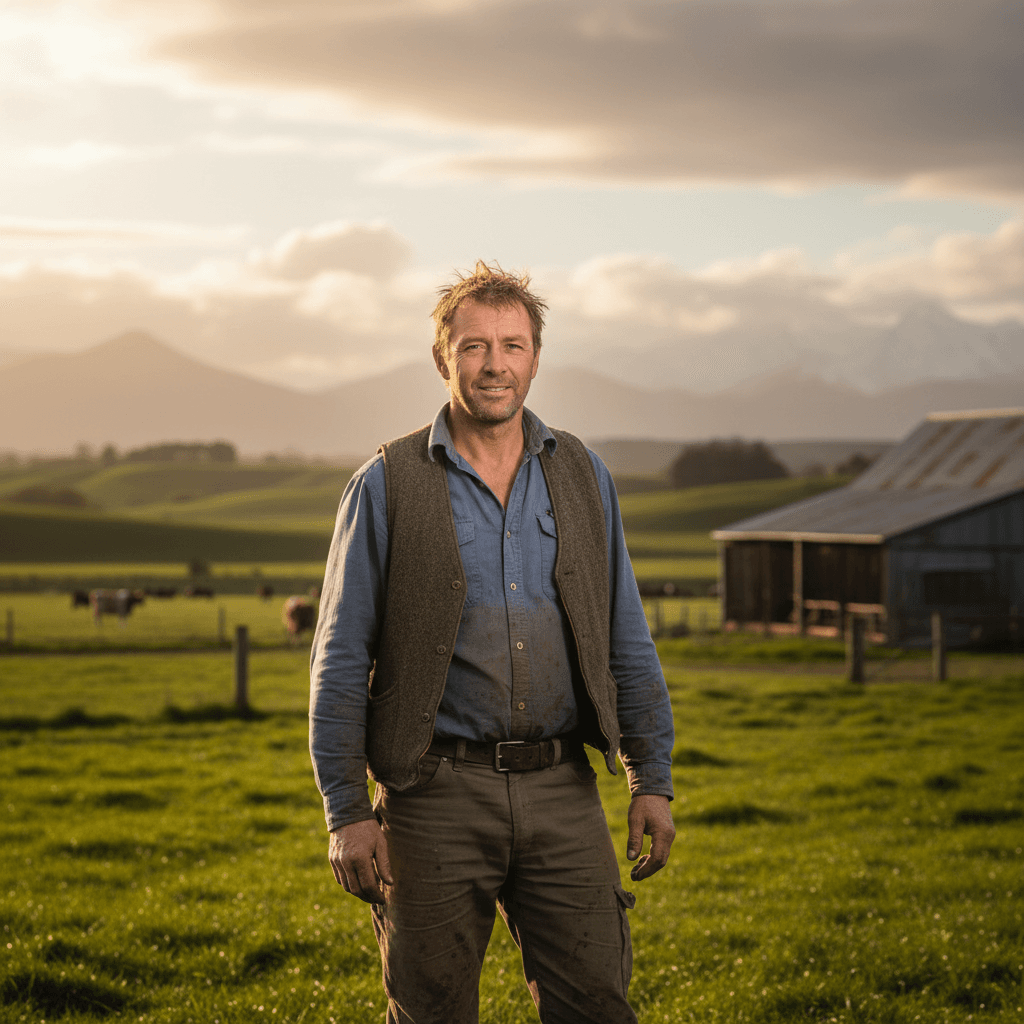
Wiebe(34)
Leeuwarden → Canterbury
I grew up on a dairy farm near Leeuwarden. After studying at HAS University in Den Bosch, I worked eight years on the family farm. But the future of Dutch dairy farming was becoming increasingly uncertain — nitrogen regulations, land prices of EUR 80,000 per hectare, and ever more bureaucracy. When I saw a presentation about dairy farming in New Zealand at an agricultural fair, I was fascinated.
New Zealand is the world's largest dairy exporter, and Fonterra (the cooperative that nearly all farmers belong to) actively seeks international experience. I applied through a recruitment agency specializing in agricultural migration. Within two months I had an offer as farm manager on a 400-cow operation on the Canterbury Plains, near Ashburton.
My visa was through the Accredited Employer Work Visa (AEWV). My employer first had to do a job check with INZ to prove there was no suitable New Zealand candidate. That succeeded, because experienced dairy farmers are scarce. The visa was sorted within six weeks. I did have to provide a medical examination and police clearance, but that was routine.
Farming here is fundamentally different from the Netherlands. The cows are outside year-round — no barns, no manure storage, no nitrogen problem. The system is based on pasture management: you rotate cows across paddocks and the grass does the work. The milk price is linked to the world market via Fonterra, which means good years are really good, but bad years hit hard.
What surprised me was the sense of community in rural areas. Canterbury is sparsely populated, but everyone knows everyone. The neighbors help with calving, there are rugby nights at the community hall, and the local pub is the social center. I've never felt so welcome. There are also surprisingly many Dutch and South African farmers here — we sometimes speak a mix of Afrikaans.
My goal is to buy or lease my own farm within five years. Land in Canterbury costs around NZ$30,000-50,000 per hectare — a fraction of the Netherlands. After three years on my work visa I can apply for residence through the Skilled Migrant Category, with my work experience and job offer as the basis. If you're a farmer considering emigration: New Zealand is the land of milk and honey, literally.
Highlights
- Accredited Employer Work Visa arranged within 6 weeks
- Land price NZ$30-50K/ha vs. EUR 80K/ha in the Netherlands
- Fonterra cooperative: pasture-based system without barns or nitrogen rules
- Strong Dutch and South African farming community
Other stories

Jeroen
Breda → Auckland
Cybersecurity is on INZ\
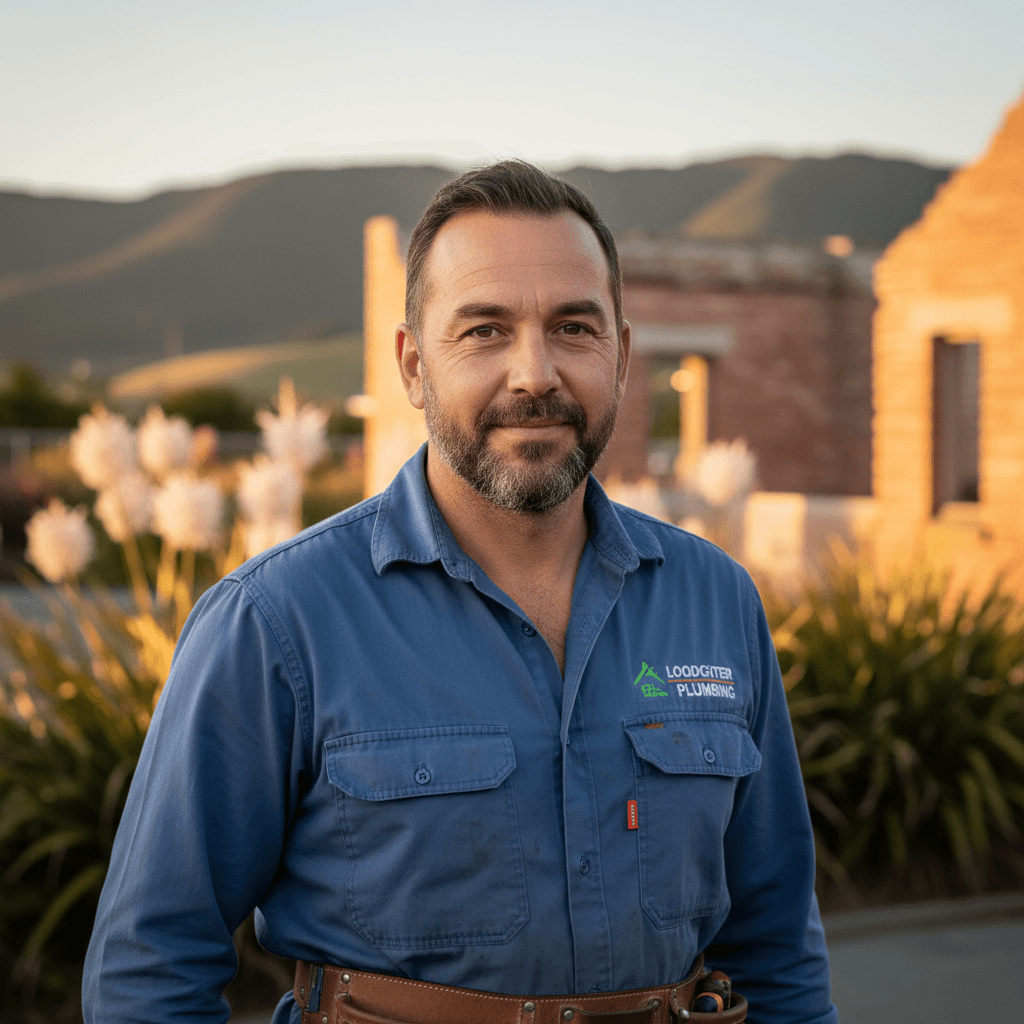
Rick
Almere → Christchurch
As a plumber I was on the Green List. Christchurch\

Bas
Amsterdam → Auckland
With 160 points on the Skilled Migrant Category I got my residence visa within six months. Auckland is expensive, but the opportunities in tech are enormous.